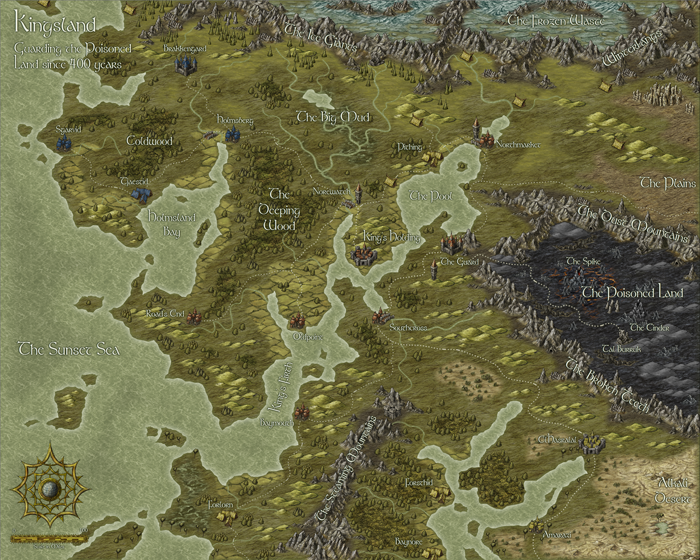
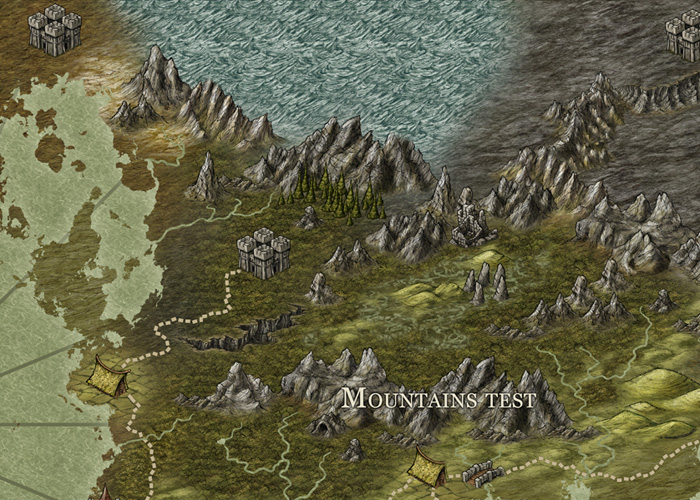
Here’s a preview for Sunday’s upcoming Annual issue. Herwin Wielink‘s beautiful overland style:
Originally posted on mappingworlds.wordpress.com
In my last post I presented the City of Lost Souls. The idea of the city has been in my mind for a long time as a city that originally was created by outcasts from the ordinary society. Outcasts that in the end have created a powerful city, a city made untouchable because of its location in the middle of a maze like river delta.
In this post and the next couple of post I’ll try to describe the process I’ve developed when I create cities. I don’t say that this is the best way to do it but it is one way to do it. To exemplify the process I’m using I will use the map of the City of Lost Souls.
When I decide to make a map it is always easier to start if you can get some inspiration from the real world. One of the best tools you can use is Google earth. You can learn tons of information just by moving around the globe looking at old cities, land formations and following rivers through the landscape. In this particular case I looked a lot at river deltas and cities situated at the end of rivers.
You will never find anything that will look exactly like the part you want to create, but the idea here is to find real world location that can inspire you, and that you can copy bits and pieces from. In this way you can create a map that will look much more convincing than if you just draw something from your head.
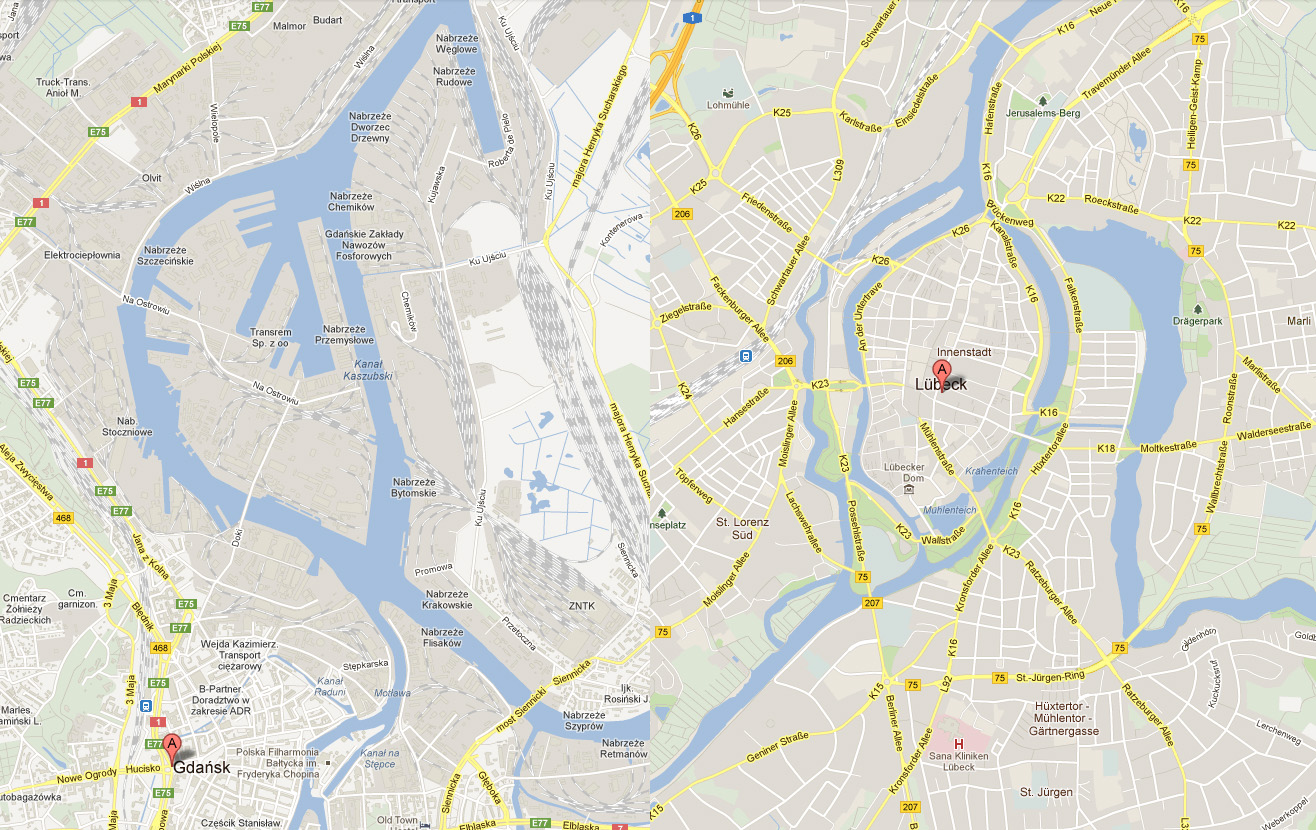
I soon found two cities that gave me the right feeling. These cities were Lübeck in the northern parts of Germany and Gdansk in Poland. None of them was perfect but I liked the flow of the river around the old part of Lübeck (as you can clearly see in the map), but this part missed a harbor. So I picked the harbor from Gdansk for the map. I also added in some more rivers to get the feeling that the city really is situated in a river delta.
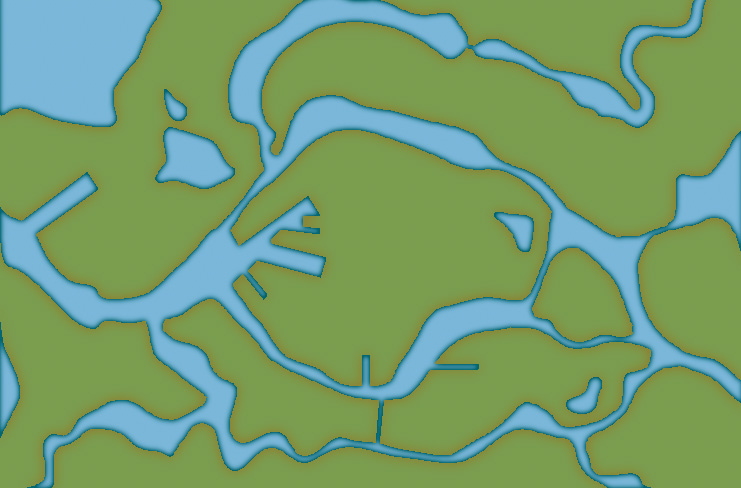
In City Designer 3 (CD3) I then started a new map and started to draw the rivers. During the process I looked at the cities for inspiration but still trying to do something original. While creating the island where the actual town would be I draw the outline of the harbor already at this stage. In this way the shadows between river and land would be right later on. So at this stage I had a quite clear picture on how I would progress with the city. In the picture below you can see the result when all the terrain was done. Next step would be to start on the actual city.
Making a City part 1
Making a City part 2
Making a City part 3
Making a City part 4
Created by Jonasgreenfeather on the ProFantasy Forum.
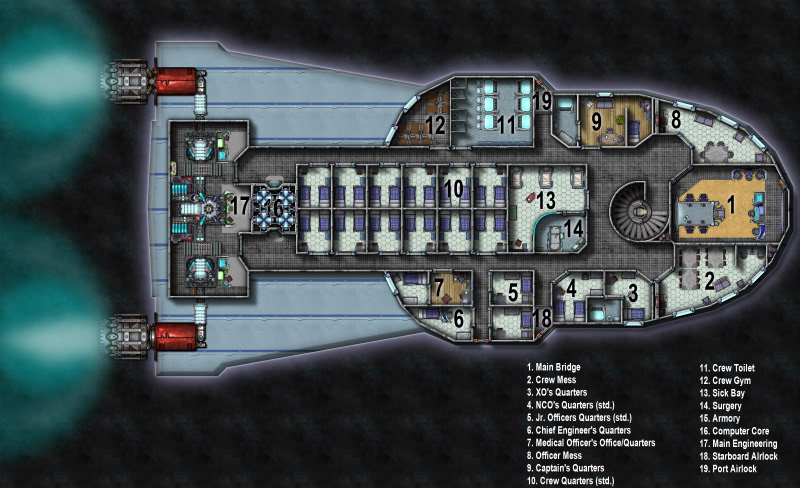
He says of this ship, created with Cosmographer 3:
Like many forum members, I’ve been drawing maps (both fantasy and sci-fi since I was a kid of 9 or 10 years
old). I’ve had CC3 since February-ish of last year, but took a really long break from it while I was looking for work. I think that my tenacity and OCD makes up for my lack of initial planning and can’t keep things well enough alone 🙂 I often only have a faint image of how a landscape, ship or city is going to end up and each often goes through several revisions before I’m satisfied with the result. I find it’s a very organic (and sometimes frustrating) process: the land shapes the features shapes the cities and roads shapes the land…
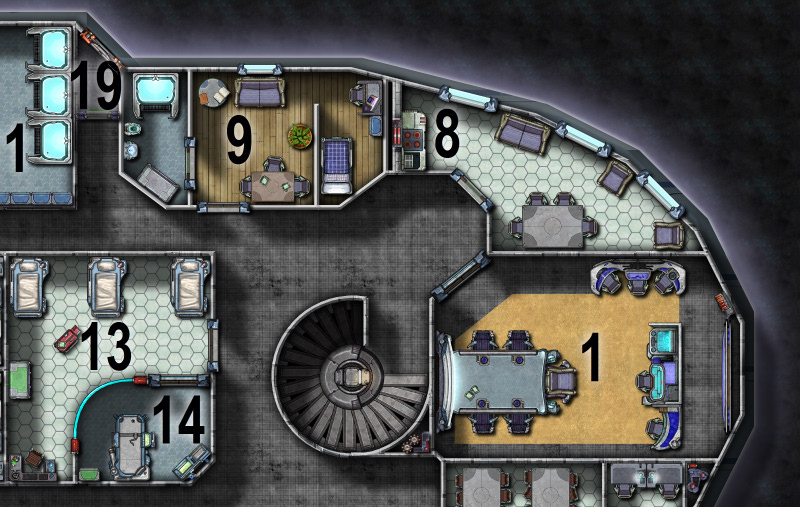
The ship in this thread grew from the idea of an engine and a bridge connected by a spine, different modules could be plugged into the spine depending on the mission requirements (living spaces, labs, hanger bays, cargo, etc.) BUT… when I started drawing the modules I drew the rooms to small and nothing fit in the “slots”, so I took what I liked (the bridge) and then built the captian’s cabin, first starting with the furniture and then building the walls. Once that was done it was time to think about the “why” of the ship, it made sense to me that the captain and first officer would have cabins on different sides of the ship (in case of attack one hit wouldn’t take them both out). So I coppied the bulkheads of the captain’s room and turned it into the XO’s and NCO’s quarters (as they would have less room than the CO)! the rest of the ship just sort of grew from there.
Well, that was a bit a tangent but gives you an idea of how I Cartograph (is that a word?)! To summarize, I’m playing, learning and expermenting all the time to share what I see in my head with others.
First buildings with effects on
Ok, we’re going to spend time today filling in a block section with houses. We’re going to be using the House command from CD3 extensively, so you should be an expert in it once we’re done.
The house command is in the 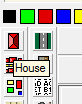 upper left corner of your toolbar and looks like a roof seen from the top – a screen shot is to the right (you can see the “House” tooltip as well):

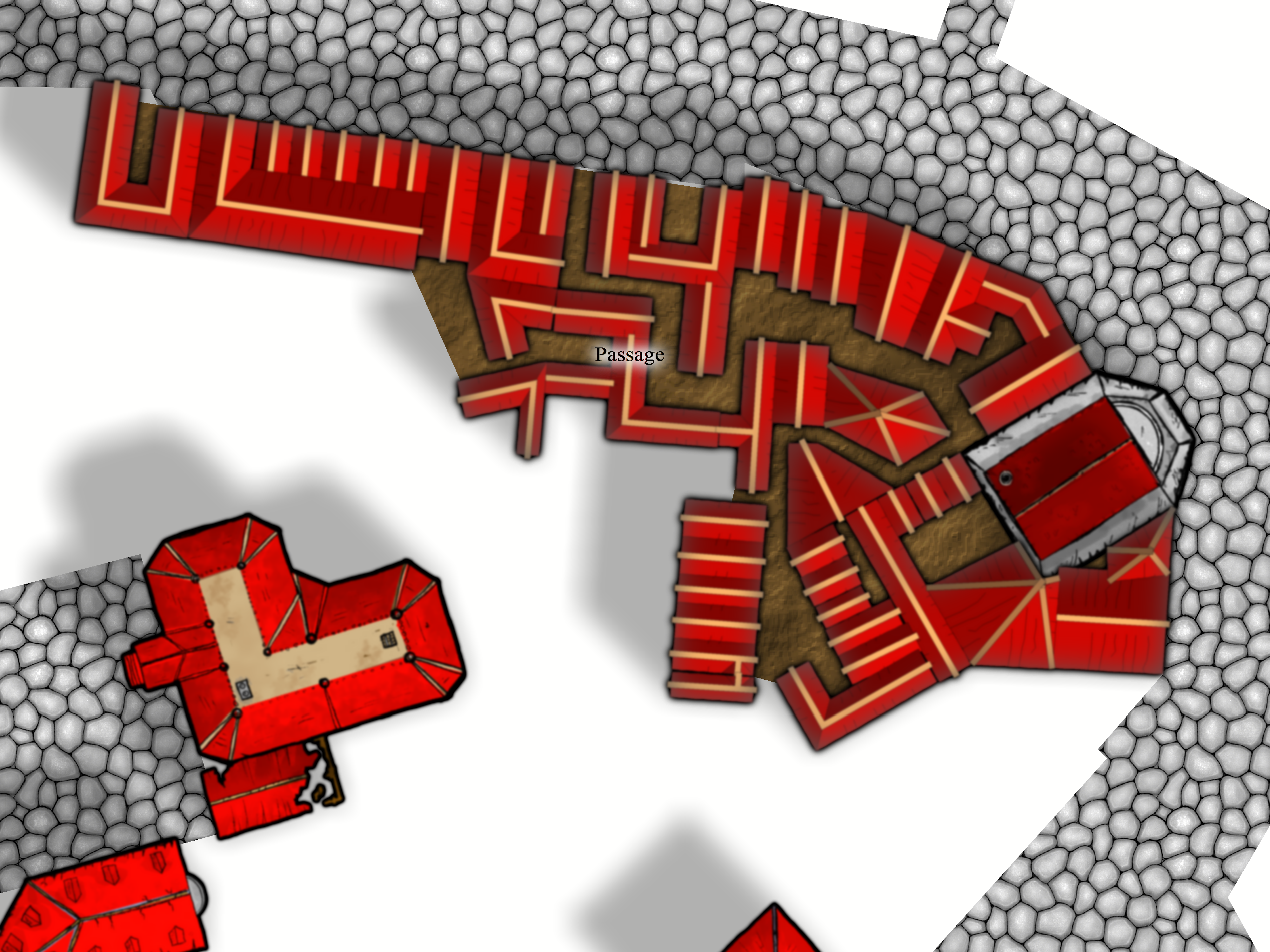
We have another gorgeous new mapping style lined up for the Annual – I’m really excited about the great artists that draw the art for us this year. Take a look at this beautiful isometric dungeon by Herwin Wielink. How would you like being able to build something like this in CC3 from pre-drawn tiles and connecting room and corridor pieces? Well, you’ll be able to come June.
We are very happy to release another drawing style by fantasy cartographer Jonathan Roberts – this time it’s a city style, completing the standard trilogy of map types. Jon Roberts’ overland and dungeon styles were released last year in the Annual Vol 5, the latter being a free download. You can subscribe to the current annual here.
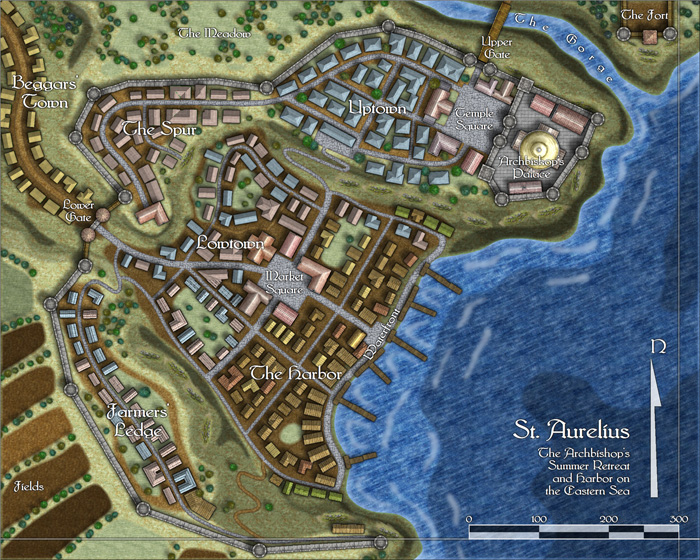
There’s also a little preview of the upcoming April issue, created by another extremely talented fantasy cartographer and artist, Herwin Wielink.
Originally posted on Mapsandmore.com.
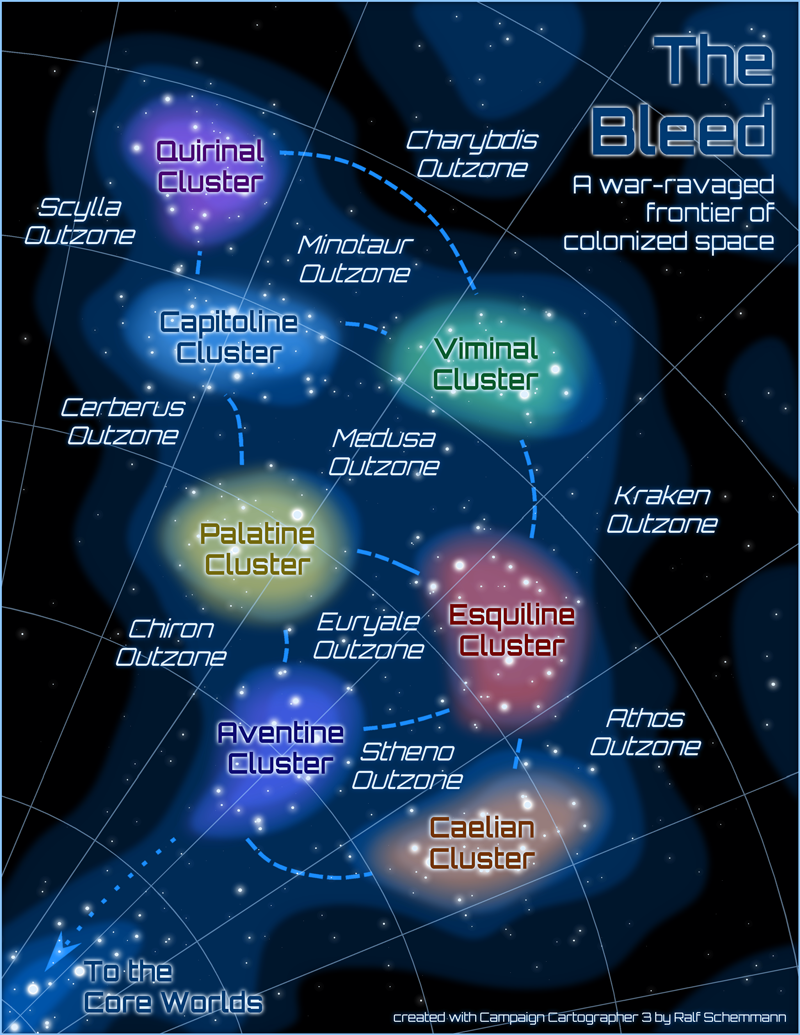 Ashen Stars is a wonderful space opera rpg by Pelgrane Press, based on the GUMSHOE system. I had the pleasure to create the game’s published setting map (a part of the Galaxy called “The Bleed”) based on a sketch by Robin D. Laws.
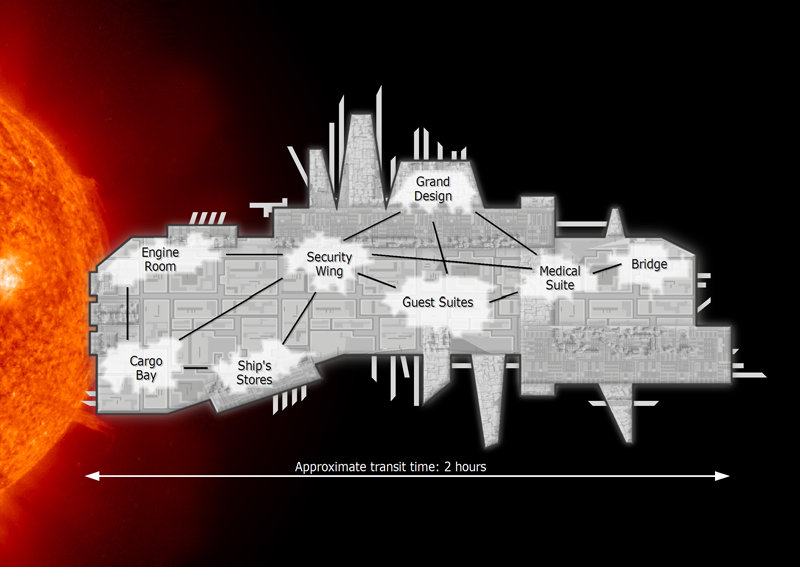
Lately I got to revisit the setting when, after play-testing the upcoming Terra Nova adventure, Simon asked me to create a simple black and white diagram of the adventure’s featured luxury liner. You can see the result below (the color background was added for web display). While the exact layout of the ship isn’t important for the story, the relative position of the important locations is, and the map shows those.
A little peek at the work-in-progress on one example map for the March Annual:

Also, a little sneak peek at the April issue:
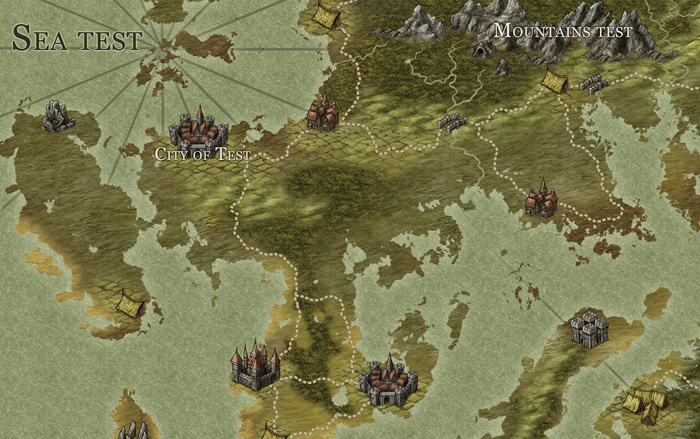
A little sneak peek on the symbols included with the upcoming Jon Roberts’ Cities style (the March issue of the Annual 2012).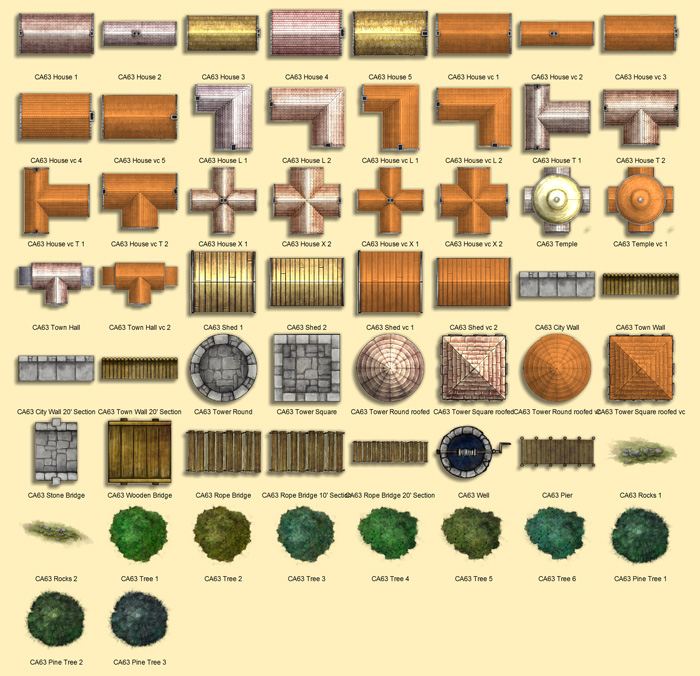
The first thing I thought of when I saw this map by CC3 user Gerard Serre was Ultima IV, one of the greatest computer games ever made. The layout of the town could be lifted straight out of that game and I see my little pixel avatar wandering around the buildings (C)hatting up each and every passerby.
Gerard’s map is in 4 parts and done as a 25mm scale miniature battle map with Dungeon Designer 3. Overlaid with a grid and printed to scale it creates an excellent floorplan for a town skirmish.


